Designing the Future of Audit Workflows: From Ambiguity to Agentic AI
Context & Project Overview
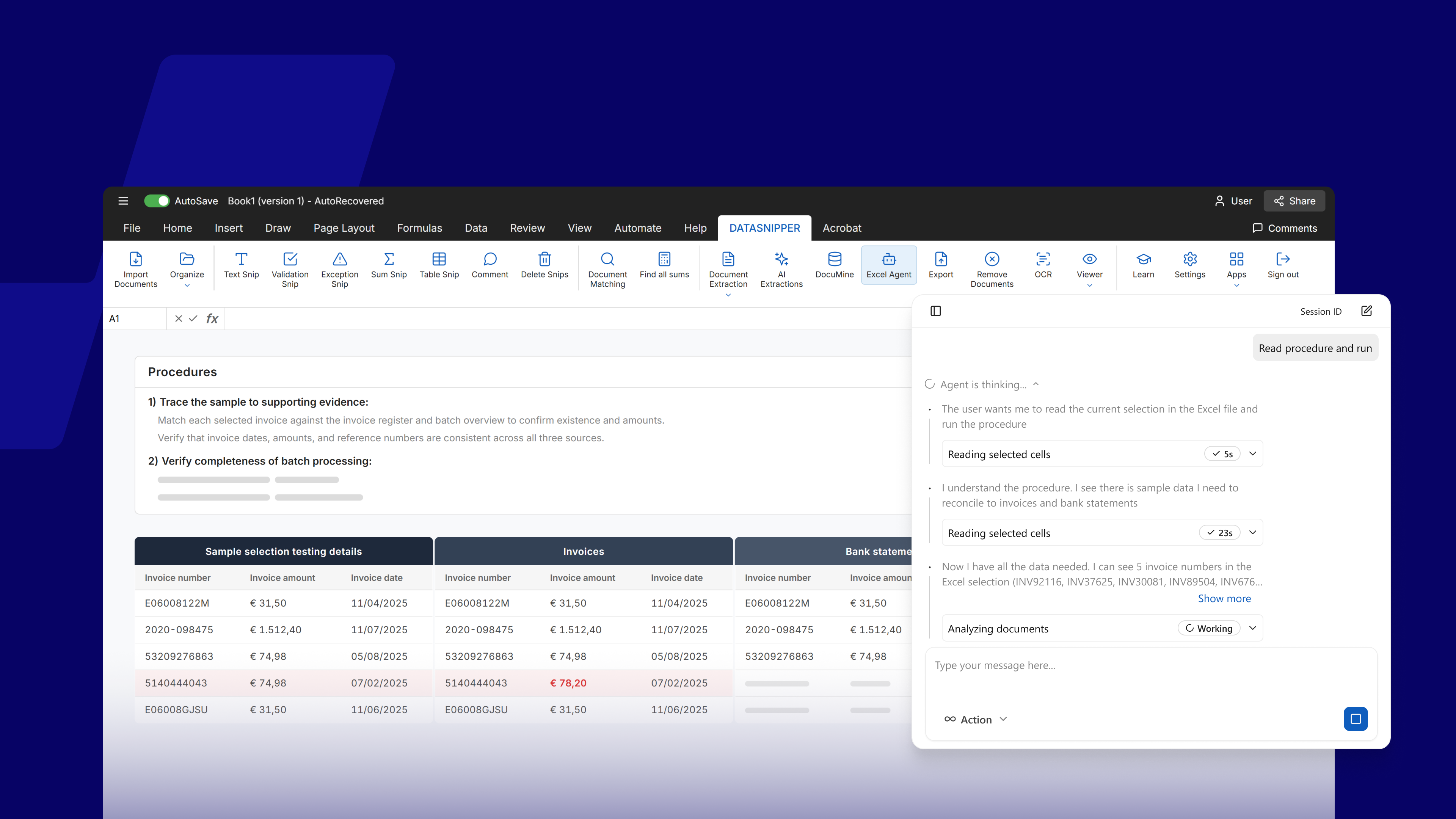
TL;DR: I led the design strategy and interaction model for DataSnipper's Agentic AI workflow, taking the product from an ambiguous platform opportunity to a validated AI-native B2B workflow concept. The work reduced setup friction, clarified how users should review and trust AI-generated work, and helped the team shape a feasible MVP with 12 partner firms.
What is DataSnipper? DataSnipper is a platform that helps audit and finance teams work faster by automating repetitive document and data tasks. It started as an Excel-based productivity tool, but today it is evolving into a broader platform that supports end‑to‑end audit workflows. The core idea is simple: reduce manual copying, checking, and cross‑referencing so professionals can focus on analysis and judgment instead of mechanical work.
Why did we start this project? DataSnipper had strong product-market pull, but the core experience was still centered around manual execution. We needed to define the next major platform opportunity: how emerging AI could help audit teams move from individual document tasks to repeatable, end-to-end workflows.
My Role: I started this initiative as Senior Product Designer and was promoted to Staff Product Designer as the scope expanded. Across the project, I led product design strategy, research synthesis, workflow systems design, interaction design, prototyping, and partner validation in close collaboration with PM, Engineering, and customer-facing teams.
Timeline: Feb 2025 – Present
What this case demonstrates
- Turning strategic ambiguity into a concrete AI-native product direction
- Designing AI behavior around user intent, system constraints, human review, and traceable output
- Translating complex B2B workflows into clear interaction patterns across roles and expertise levels
- Keeping the full journey coherent across scattered tools, technical constraints, and cross-functional ownership
- Using partner validation to make scope trade-offs between desirability, feasibility, trust, and launch readiness
Initiative Impact
As the project evolved, it delivered four outcomes that pushed the DataSnipper platform forward:
- Immediate business signal: Three design partners proactively asked about pricing before launch, with one customer requesting to expand from 40 to 1,000 seats.
- Validated desirability: Repeated prototype cycles confirmed strong appetite for streamlined workflows and revealed the setup friction that would block adoption.
- AI-native interaction model: The team moved from manual workflow creation toward an intent-led agent experience where users could state goals, review plans, and inspect traceable outputs.
- Real-world MVP scope: The Design Partner Program helped the team define a first release grounded in real audit workflows, not theoretical AI demos.
Protected Case Study
This case study contains work from an active project. Please enter the access code to view the full details.