Service Ecosystem Planning
Enriching the service landscape of a premium automotive brand through strategic initiatives.
As electric vehicles, autonomous driving, and car-sharing mature, the client wanted to plan a long-term mobility service strategy. The goal was to evolve from an automobile manufacturer into a service provider while maintaining market leadership. The project focused on defining a 5–10 year service roadmap, improving the service portfolio, and building business and data analytics capabilities to support service growth.
As the lead researcher, I analyzed the client's existing services and collaborated with the team to create a blueprint for the future ecosystem. During validation and execution, I led the production and testing of concept videos and supported proof-of-concept delivery.
Project Overview
| Type | Competitive Analysis, Ecosystem Design, POC Design, User Testing, WeChat Mini Program |
| Duration | 6 months |
| Industry | Automotive, Retail |
| My Roles | Lead Researcher, Solution Architect |
| Team Size | 4-6 people |
| Outcomes |
|
Project Approach
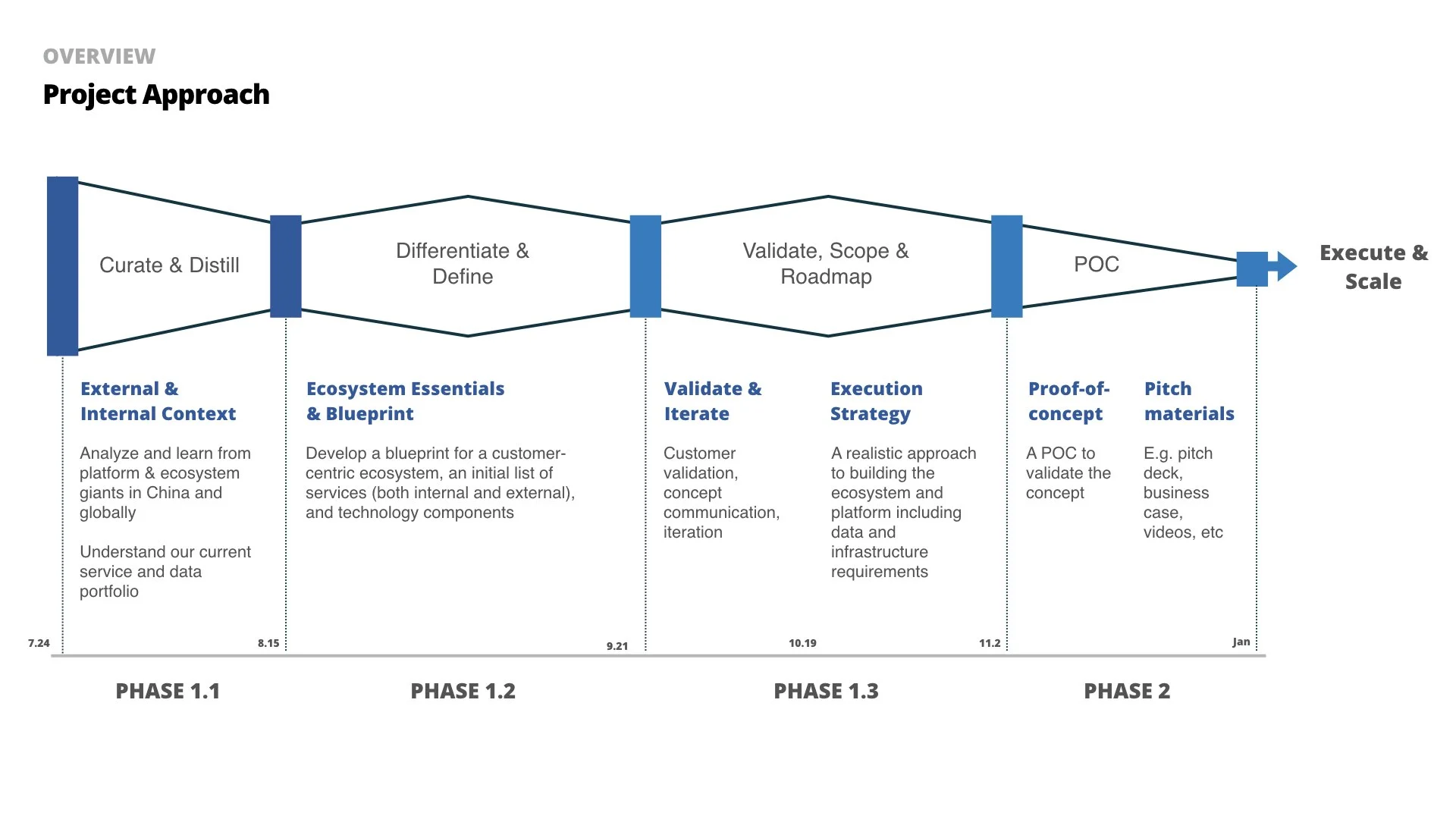
This project spanned six months. We started with interviews and desk research to understand the internal and external context. Then we defined the ecosystem essentials and identified several high-potential entry points. In Phase 1.3, we tested concepts with end customers and developed an execution strategy for building the ecosystem platform to support new initiatives. Finally, in Phase 2, we validated three proofs of concept (POCs) to varying levels to lay the groundwork for full delivery.
Phase 1.1: Understanding External & Internal Context
In this phase, our goal was to analyze and learn from platform & ecosystem giants in China and globally. In addition, we wanted to understand our current service and data portfolio.
External Landscape
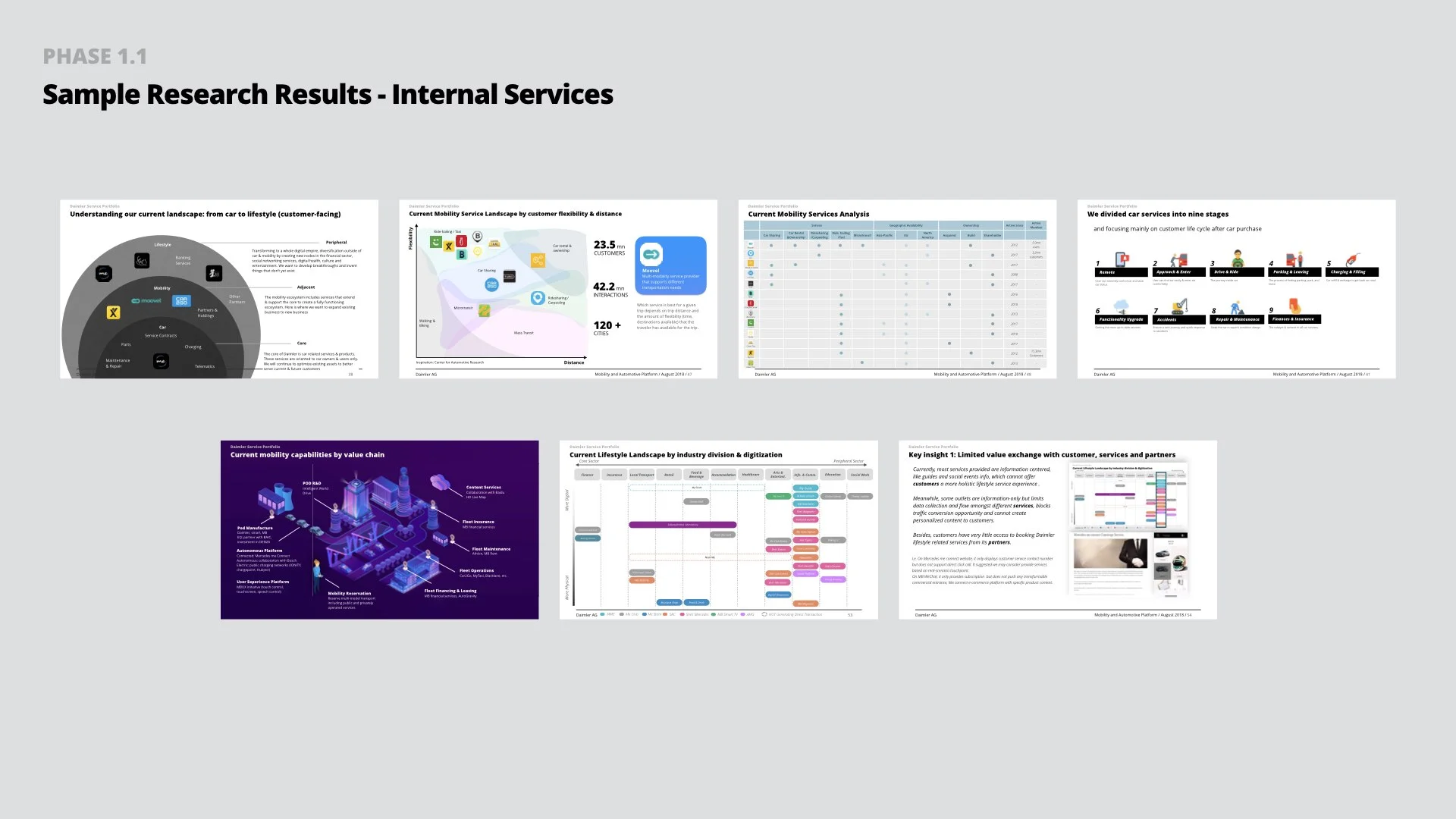
After researching ecosystem leaders in China and abroad, we created an ecosystem evolution roadmap and highlighted each stage with deep dives into companies like Alibaba, Didi, Amazon, and Apple.
Internal Services
We also studied the existing services of the client, looking closely at its core, adjacent & peripheral spheres. We concluded that there's great room for improvement in terms of deepening value exchanges, broadening target audience, and leveraging core competencies.
Phase 1.2: Ecosystem Essentials & Blueprint
In phase 1.2, we worked to develop a blueprint for a customer-centric ecosystem, define an initial list of services (both internal and external), and technology components to support these services.
Ecosystem Essentials
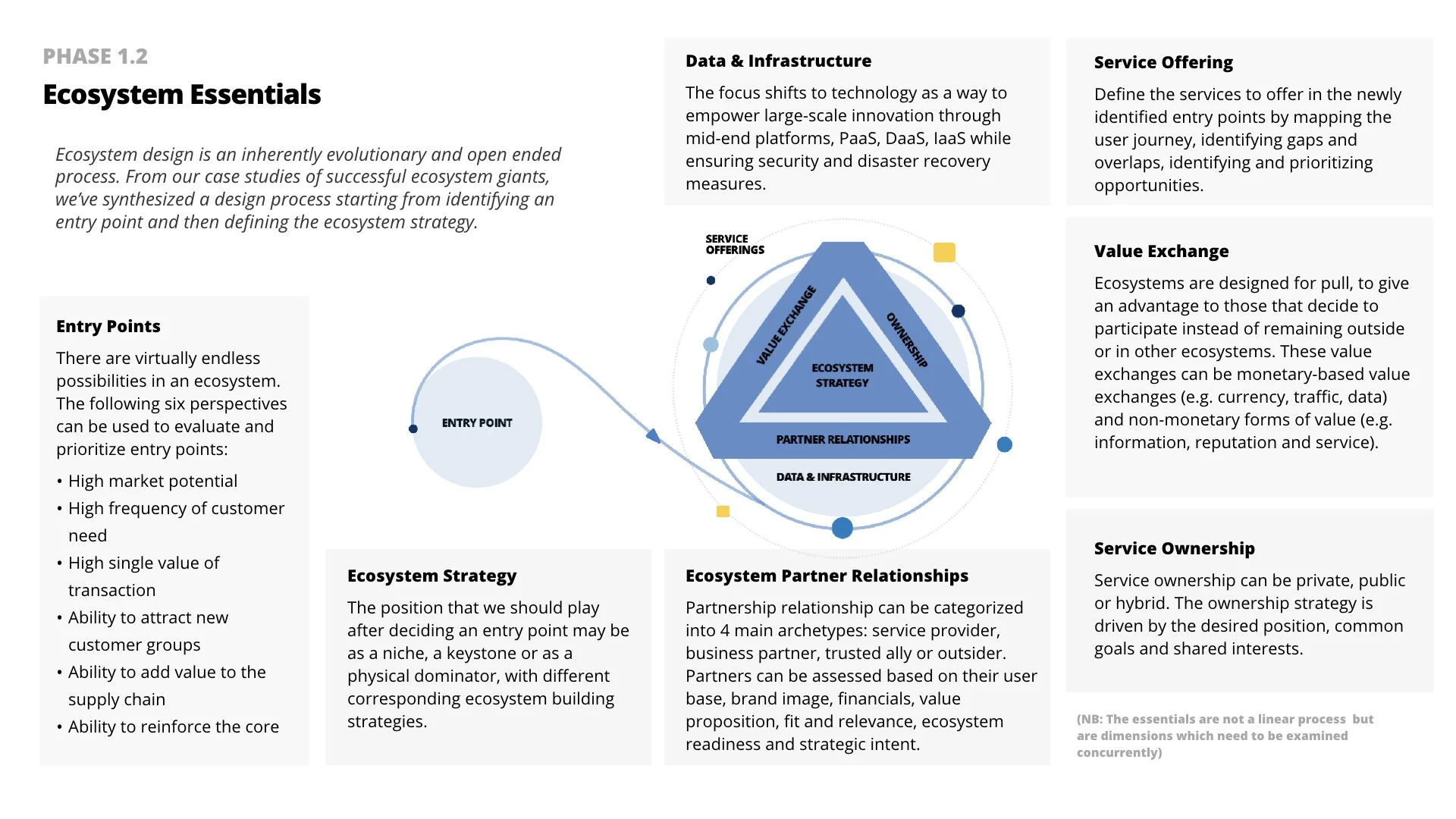
Ecosystem design is inherently evolutionary and open-ended. From case studies of successful ecosystem leaders, we synthesized a design process that starts with identifying an entry point and then defining ecosystem essentials, including: Ecosystem Strategy, Ecosystem Partner Relationships, Service Ownership, Value Exchange, Service Offering, and Data & Infrastructure.
Possible Lifestyle Entry Points
Based on understanding of the client's company culture and heritage, we defined three key ecosystem principles: Exploration, Fulfillment, and Safety & Security. Using image storming, we generated eight aspiration themes for each principle. Next, we mixed and consolidated themes into potential entry points. Below is the full set of ideas generated. We prioritized three concepts based on ecosystem opportunity and competitive advantage: Collection, Tour, and Care.
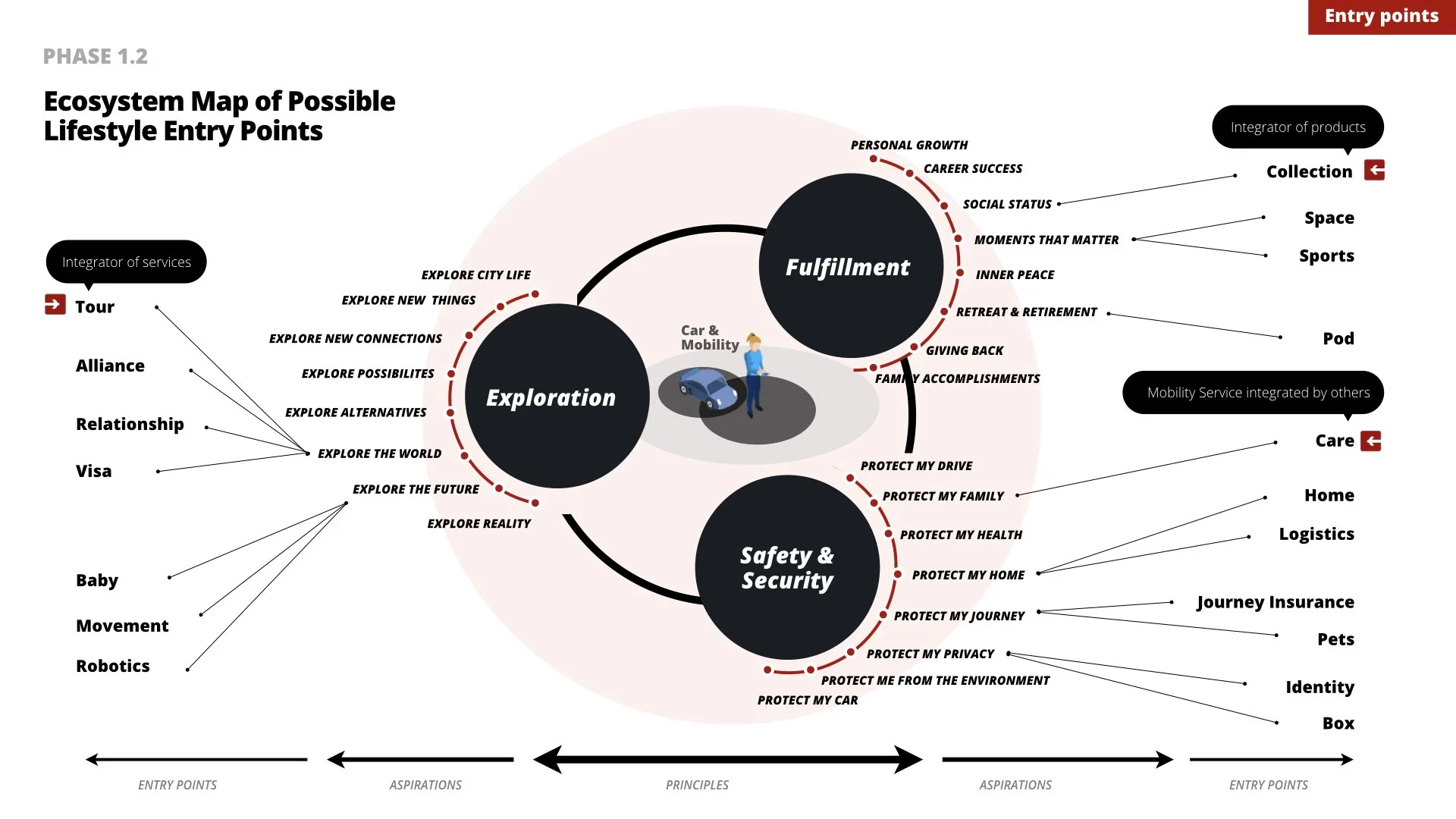
For each entry point, we examined the business landscape (industry sectors, business models, and existing services to leverage), market trends, competitors, barriers to entry, key benefits and costs, and strategic positioning.
Phase 1.3: External Validation
After defining three entry points, we needed to validate them with end users before moving to the next step. Based on the resources required for execution, we aligned on the strategy below:
- Validate Tour with an external survey to gauge business value.
- Validate Collection with an internal POC to test operational readiness.
- Hand off Care to another department to better leverage existing resources.
This section will cover how we validated the Tour concept with external customers.
Survey Structure
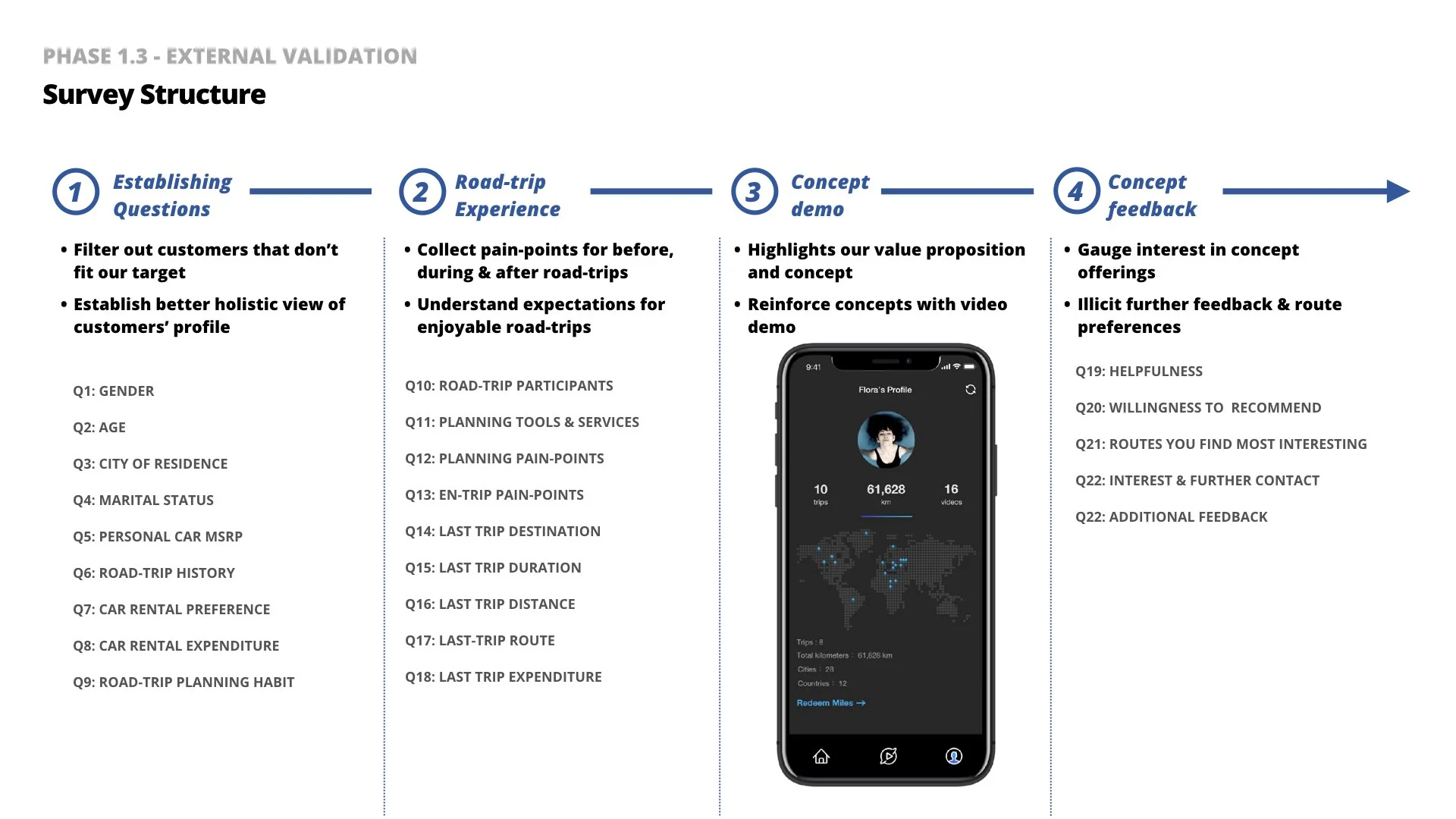
There are four parts of the survey, with their respective purposes, as illustrated below:
Survey Response
We designed three questions to gauge customer interest: perceived helpfulness, willingness to recommend, and interest in participating in the next round of research. Results were very positive and exceeded our initial targets. A breakdown is shown below.
Tour Concept Video
Phase 1.3: Execution Strategy
In the final stage of Phase 1, we defined a realistic approach to building the ecosystem and platform, including data and infrastructure requirements, and designed the Collection POC to be executed in Phase 2.
For confidentiality reasons, the strategy plan outlining data & infrastructure requirements is not shown here, only POC design is displayed.
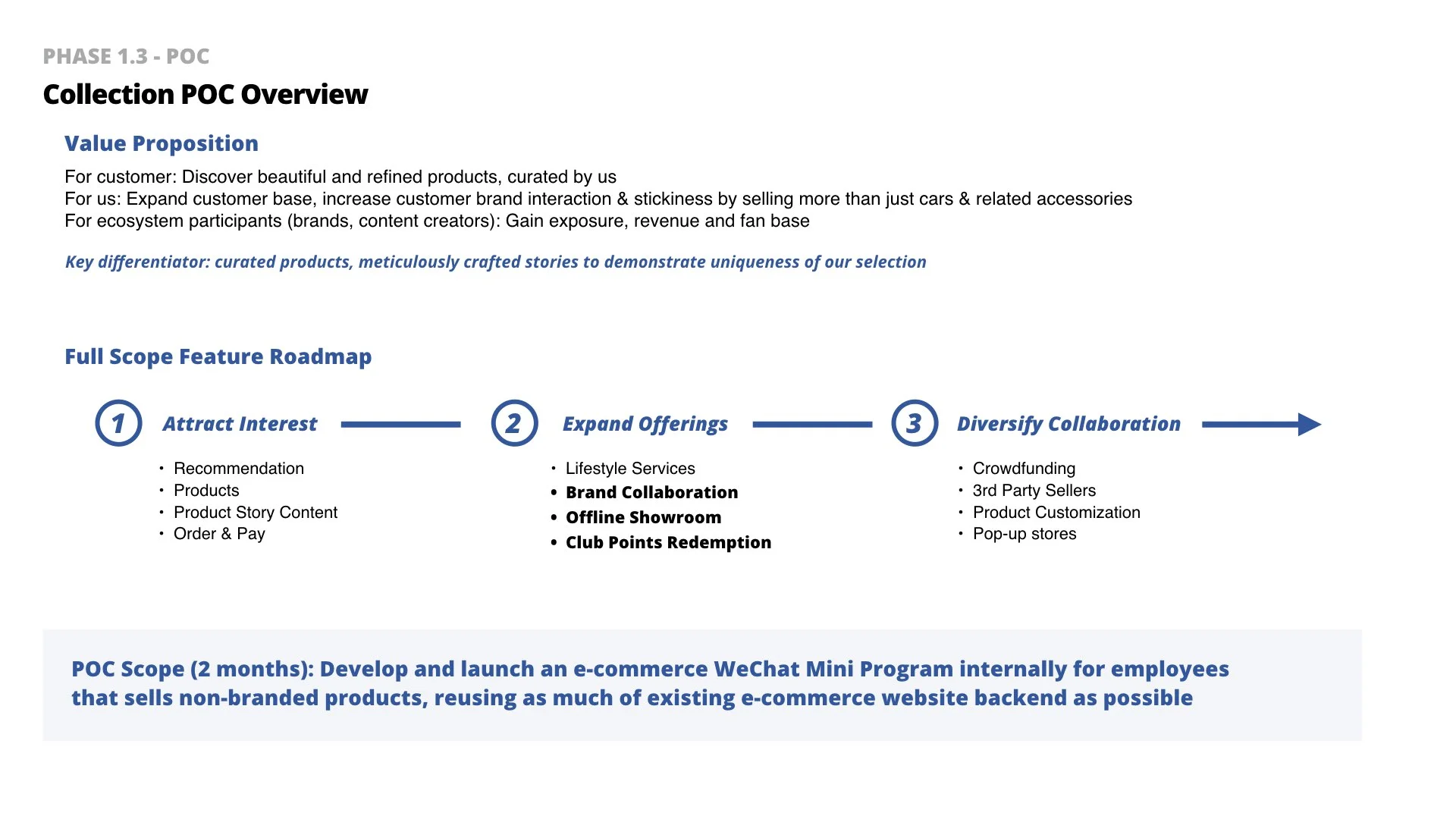
POC Scope & Overview
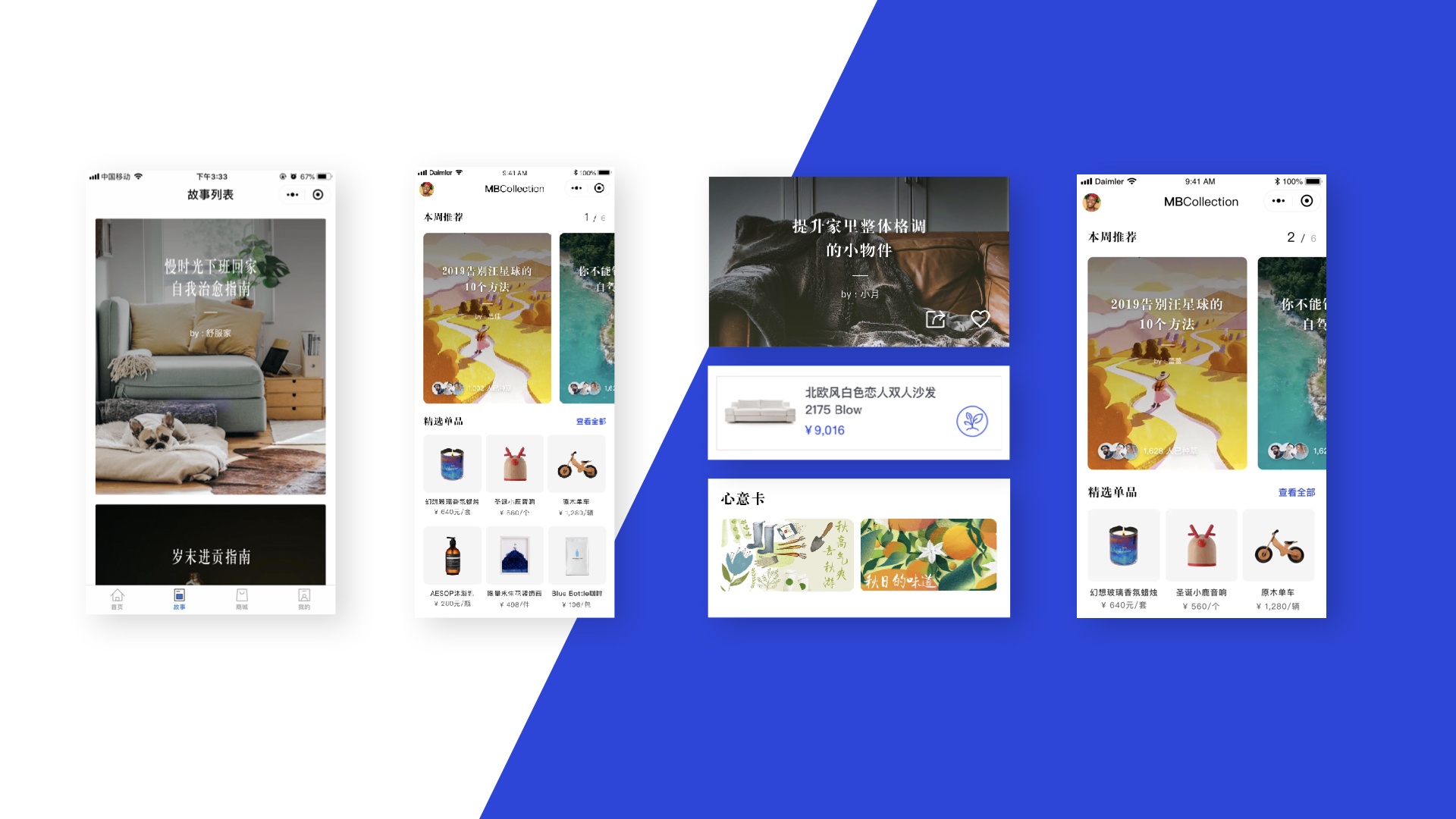
The POC design and development was scheduled for two months to develop and launch an internal e-commerce WeChat Mini Program for employees. It sold non-branded products and reused as much of the existing e-commerce backend as possible.
Product & Visual Design
We brought the Collection concept to life as a demo to test the basic information structure with internal users. We then explored three visual directions to land on the right tone and feel. One direction used a magazine-style layout for immersive reading. Another used a card-based layout for faster navigation. We ultimately chose the card-based layout to encourage exploration.
Personas & Shopping Boards
Based on user research, we created four personas: "Impulsive" Ian Li, "Researcher" Robin Wang, "Rational" Rita Chen, and "Satisfaction" Sunny Liu. We also created shopping boards for each persona to visualize the types of products they were most likely to purchase. This work informed article and catalog preparation for the delivery phase.
Operation Plan
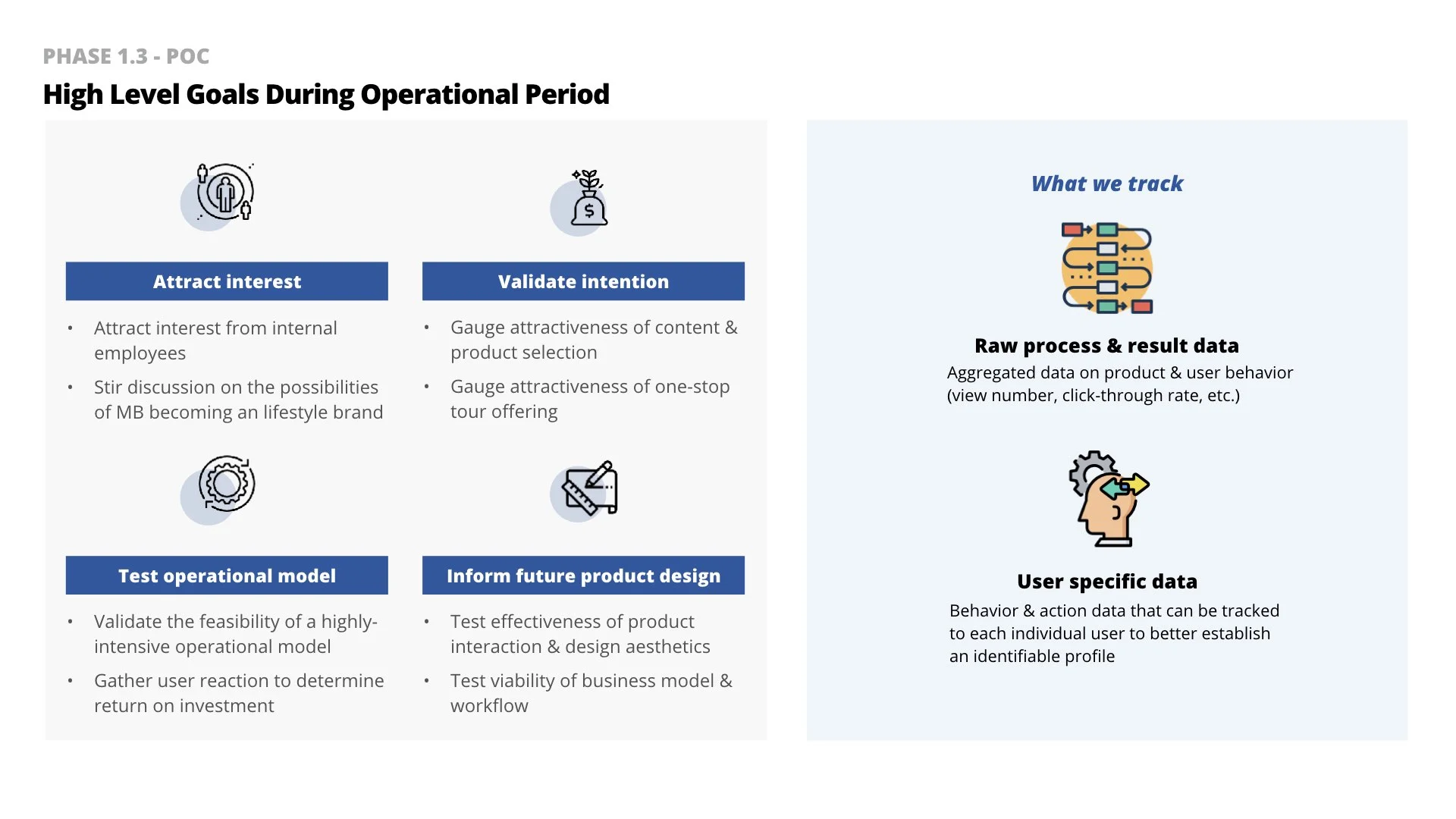
There are 4 primary goals for POC operation: attract interest, validate intention, test operational model, and inform future product design. In order to achieve these goals, we would track raw process & result data, as well as user specific data.
Phase 2: POC Delivery & Results
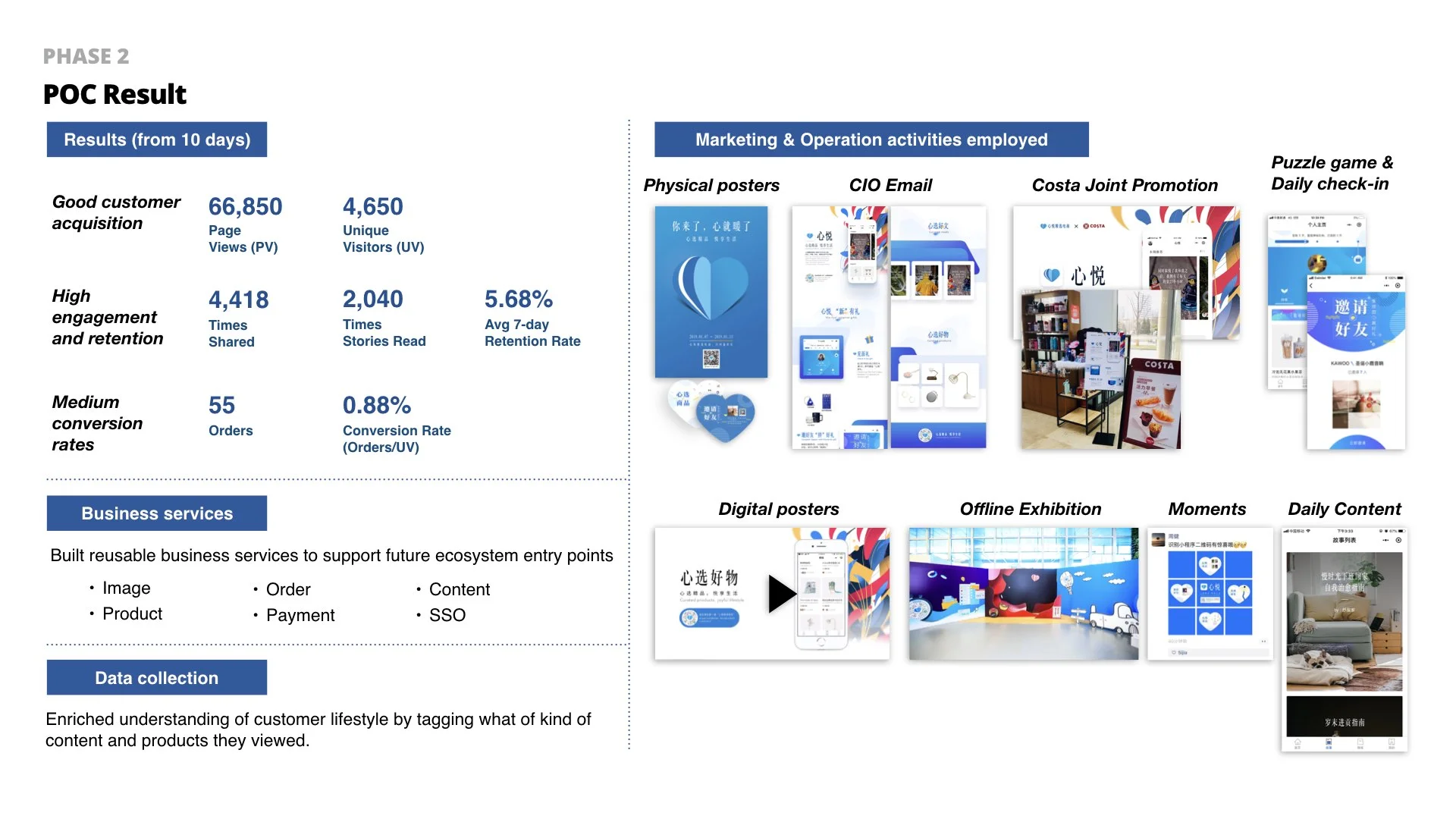
In Phase 2, we spent two months on POC delivery and content preparation. The POC was live for 10 days, with content refreshed every other day. The test generated over 66,000 page views from more than 4,600 unique visitors.
Screen Recording of Working Software
Project Reflection
This project reinforced for me that ecosystem strategy only becomes real when it is translated into specific entry points, testable concepts, and an execution path teams can carry. We moved from a broad 5–10 year ambition to actionable direction by creating a shared ecosystem blueprint and focusing the organization on a small set of high-potential entry points.
A key learning was balancing external patterns with internal capability reality. Studying ecosystem leaders accelerated our thinking, but assessing the client's current service and data portfolio kept the roadmap honest about what could be delivered.
I'm proud of the way we de-risked decisions through staged validation, using different methods based on the uncertainty: an external survey to test market pull, an internal POC to test operational readiness, and targeted handoff to leverage existing resources. If I were to improve one thing, I would define a simple measurement model earlier, so prioritization across initiatives relies more on a shared scorecard and less on debate.